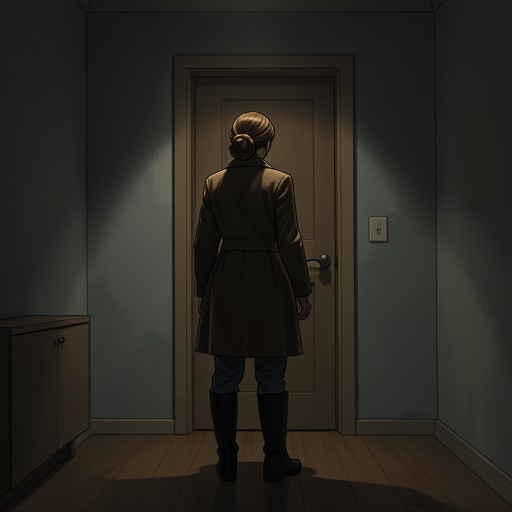
Even
The Leopard (Jo Nesbø Edition)Even, Kaja Solness’s older brother, remains central to her life long after his death by suicide. He was her protector, teacher, and ideal, and the loss she recounts is bound to a precise, devastating memory: on a bright summer day, she found him hanging in her bedroom, wearing a sweater she had knitted for him. Even is present in the story through Kaja’s recollections, but those memories reveal both the care that made him her model and the grief that has never loosened its hold.
Identity and family
Even was Kaja’s older brother. Their father left when they were young, while their mother, in Kaja’s account, lived in her own world. In that absence, Even took on the work of both parents: he helped Kaja, encouraged her, brought her up, and became the example by which she measured herself. Kaja calls him perfect and without flaws in her eyes, and insists that the closeness they shared left a feeling that would never disappear. Her certainty describes the force of her attachment, not an independent portrait of a brother free of contradiction.
During the last years of his life, Even studied in Oslo and lived with their father in the house that later became Kaja’s home. Their father died shortly after Even. Kaja had already moved into the house and took it over, furnishings and all. The domestic space thus connects her present life to the two family deaths, even as her most vivid memories of Even reach elsewhere, to their childhood and their summerhouse.
The brother Kaja remembers
Kaja remembers Even as a person of striking emotional contrasts. There were periods when he seemed to bring sunlight with him: his smile and laughter could make troubles seem to dissolve. In his dark periods, the atmosphere changed; he fell silent, and Kaja felt a subdued, almost tragic quality settle around him. Even then, she thought his eyes retained some of their brightness, as if they continued to laugh. Her recollection does not resolve these opposing impressions. His warmth and his despair belong to the same portrait.
The bond also appears in ordinary, physical memories. Even used to pay Kaja a krone to tickle his feet, which he loved. On a winter journey across the snow near Ustaoset, the empty white terrain reminded Kaja not of a desert, as she had heard it did for others, but of the days and nights she had spent out at sea with her brother on his boat. The snowfield seemed to become another sea in her memory: a present landscape read through the companionship she had lost.
Even also passed along practical knowledge from their grandfather, who made ropes. Kaja recalls that he had explained why their grandfather used only linden bast: its fibres absorbed the least water, so the ropes did not need to be tarred. In a conversation about the unusual use of mixed tree fibres in a rope, that family detail becomes useful to an investigation into where such a rope might have been made. Even’s remembered voice therefore carries not only emotional weight but a concrete piece of inherited knowledge.
His death and Kaja’s discovery
Even left a note, but Kaja does not disclose its contents in her account. His suicide took place during the summer holidays, on a radiant day at the family’s summerhouse on Tjome. Kaja had gone out after getting up to buy strawberries. When she returned, breakfast was ready, and their mother called upstairs for Even to come down. He did not answer. The family initially thought he was still asleep; sometimes he slept until noon.
Kaja went upstairs to fetch something from her own room. She knocked at Even’s door and called out that she had brought strawberries, then entered her room without looking around, focused on where she meant to go. She first noticed that the light seemed different. Then she saw his bare feet. Because she knew them so well from the game of tickling, her first thought was that he was flying and had finally managed it. Looking higher, she saw the blue sweater she had knitted for him and the extension cord by which he had hanged himself from the lamp.
Kaja believes Even waited until he heard her get up and leave the house before entering her room. She wanted to run but could not move. She tried to call their mother, making the effort to form a cry, but no sound came out. The familiar feet, the handmade sweater, and the ordinary errand for strawberries make the discovery inseparable from the intimacy of their shared life. The scene gives no explanation for his decision; it records instead the terrible interval between not seeing him and understanding what she has found.
Afterlife in Kaja’s present
Even’s death occurred ten years before the conversation in which Kaja describes it, but her responses show how persistently he remains a measure of closeness. When Harry Hole asks who helped make her the person she is, she answers immediately: Even. In another conversation, she speaks of their private place, where the two of them could hide and tell each other secrets. These memories present a relationship built not only from responsibility but also from chosen privacy and trust.
That attachment shapes Kaja’s response to Aslak Krongli. When she meets him at Ustaoset, the low winter sun behind him, his confident walk and bright smile make her freeze: for an instant, she thinks he is Even. Later, seeing the way Krongli’s eyes seem both to weep and laugh reminds her of Even’s eyes in his final days. Kaja invites Krongli to call if loneliness becomes too much. The scene does not make him a replacement for her brother; it shows how the memory of Even recognizes an expression of loneliness in someone living.
Even’s significance lies in this continuing double presence. Kaja remembers him as the person who gave her security and direction, and as a brother whose hidden despair culminated in a death she discovered alone and could not call out against. Her idealization preserves the depth of their bond, while the account of his changing moods and suicide resists reducing that bond to uncomplicated happiness. Through remembered gestures, inherited knowledge, and sudden recognition in another face, Even remains active in Kaja’s present without ceasing to be the person she lost.